
Landscape as a sway of human activities
Die Student*innen des ‹Master in Landscape Architecture› der ETH Zürich haben das Wassersystem von Granada erkundet. Inés Plasencia erklärt im ‹Campus›, wie sich die Veränderung der Landschaft anhand ihrer Infrastruktur und Architektur aufzeigen lässt. (Englisch)
As part of the seminar week organized by The Chair of Being Alive at ETH Zürich, ‹Drawing the Waters of Albaicín, Granada›, led by Professor Teresa Galí-Izard and Sophia Trumpp we explored the city’s water system. This essay reflects on how the understanding and transformation of landscape can be revealed through its infrasctructure and architecture.
Geology, water, topography and climate are the organizing principles through which Granada became habitable during the Roman Period (3rd-2nd century BC) and further developed during the Islamic period (8 Century) (Martín Martín et al., 2025). Today, these principles are gradually becoming less visible, but yet stand quietly to remind us that a coherent relationship and understanding of landscape creates a unique and valuable way of life. The palace of Alhambra and the Generalife along with the Albaicín neighborhood are the witnesses that tell us the story of settleres that modified the landscape to realize their own idea of paradise. They built acequias (canals), cisterns, patios, fountains, carmenes (local terraced gardens), in response to the organizing principles that make up that territory.
A geological beggining
Water is precious in Granada because it has a Mediterrenean climate with four months of drought. To understand the availability of water, geology plays an important role. Granada sits in the Betic Cordillera, formed by the collision of the African and Eurasian plates. It lies on the foothills of the Andalusian mountain range, where it includes the Sierra Nevada. Another particularity of the landscape is its karstic geology, which allows rainwater to be stored in cavities, and later reappear as springs.
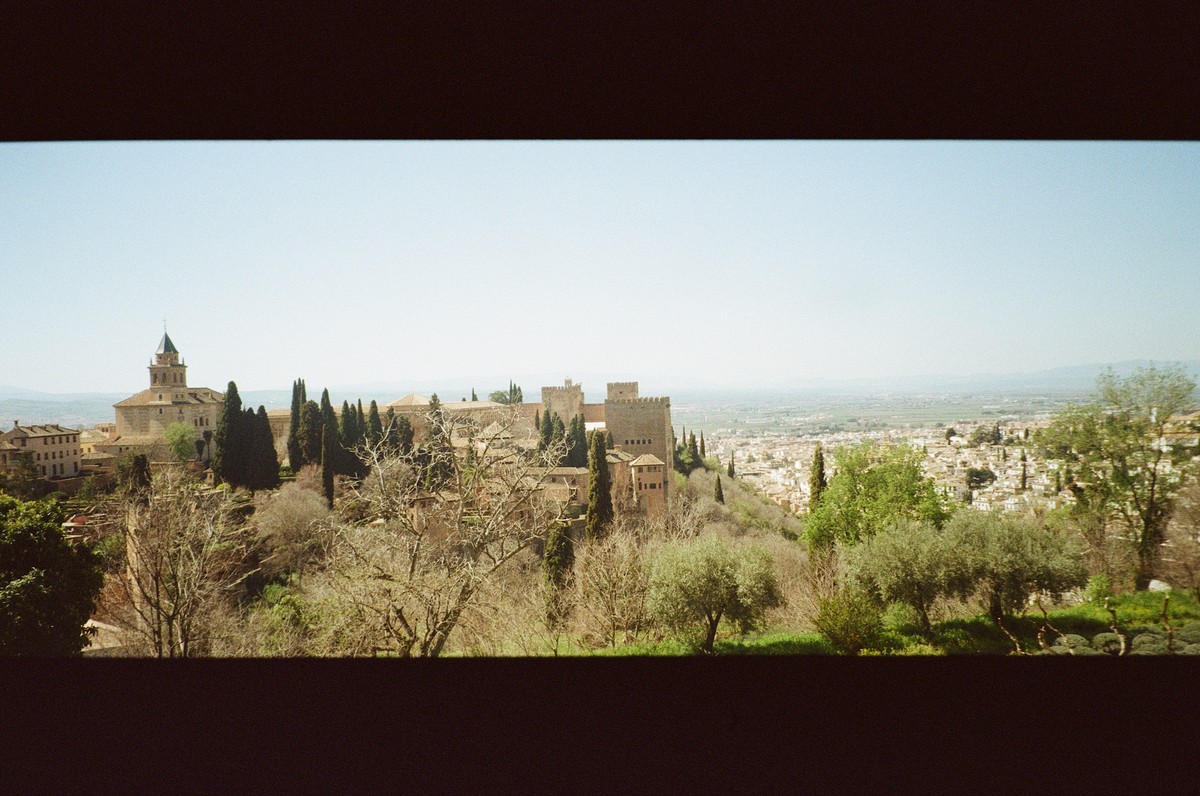
Overlooking the Alhambra in the hill of Sabinka, from the hill of San Nicolás. Image by the author.
The city of Granada rests between the Sabinka hill, where the Alhambra was built and the hill of San Nicolás, also know as the Alcazaba Cadima, where the Albaicín neighborhood is located. These two hills are divided by the Darro river, which after travelling through the city, flows into the Vega of Granada, an agricultural plain, where vegetables, fruit trees, olive trees and vines have been cultivated for centuries.
Water by gravity
Rainwater and snow are the main water sources for this landscape. The Genil River, the region’s main water body, flows from the eastern Andalusian mountain range towards the western plain. The Darro River, which passes through Granada, is a tributary of the Genil. These water resources feed two important settlements. The Albaicín water source is the result of a spring that originates at the Fuente Grande, also known as the Fountain of Tears, in Alfacar, 13 km from the city. The water from this source is distributed by gravity through an open- air canal that, in the past powered mills and supported agriculture. Upon reaching the city, this water is distributed by a closed network of underground canals serving different areas of the Albaicín neighbourhood, feeding local Aljibes – underground cisterns used for water storage – and terraced gardens called Carmens.
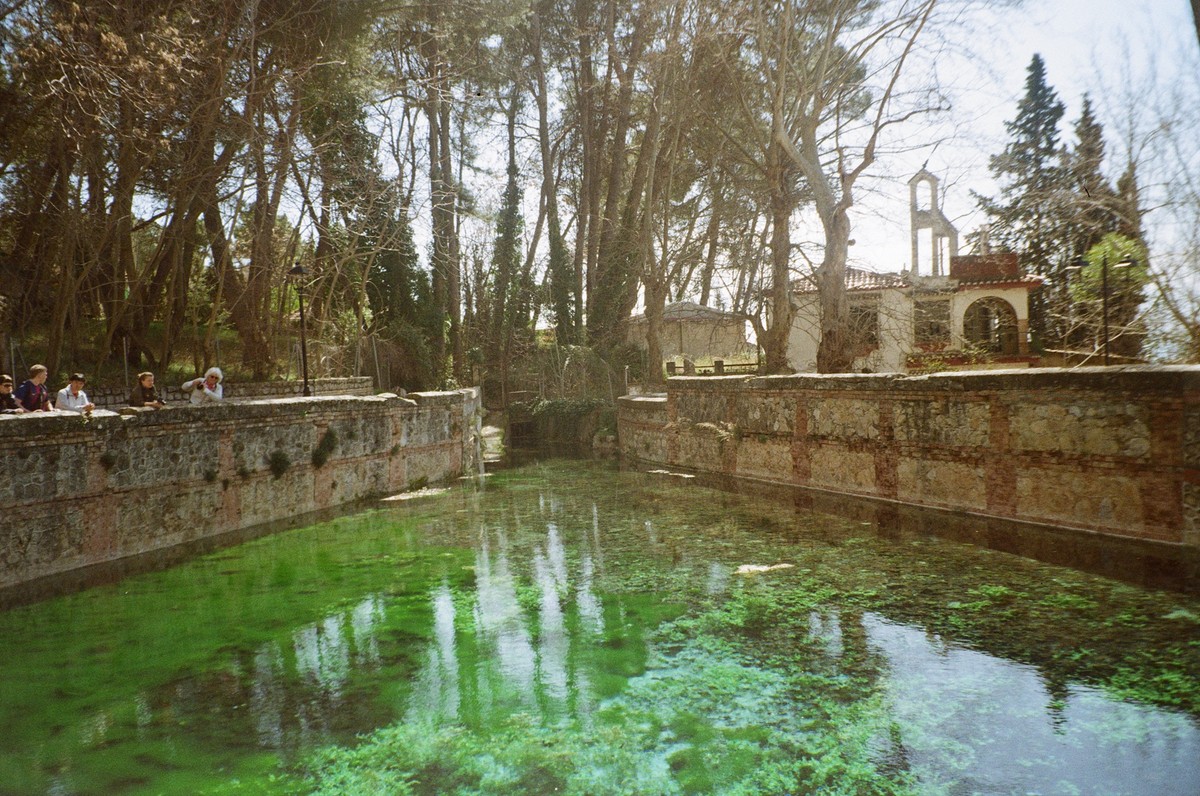
The Fountains of Tears, the spring that feeds the Albaicín neighborhood.
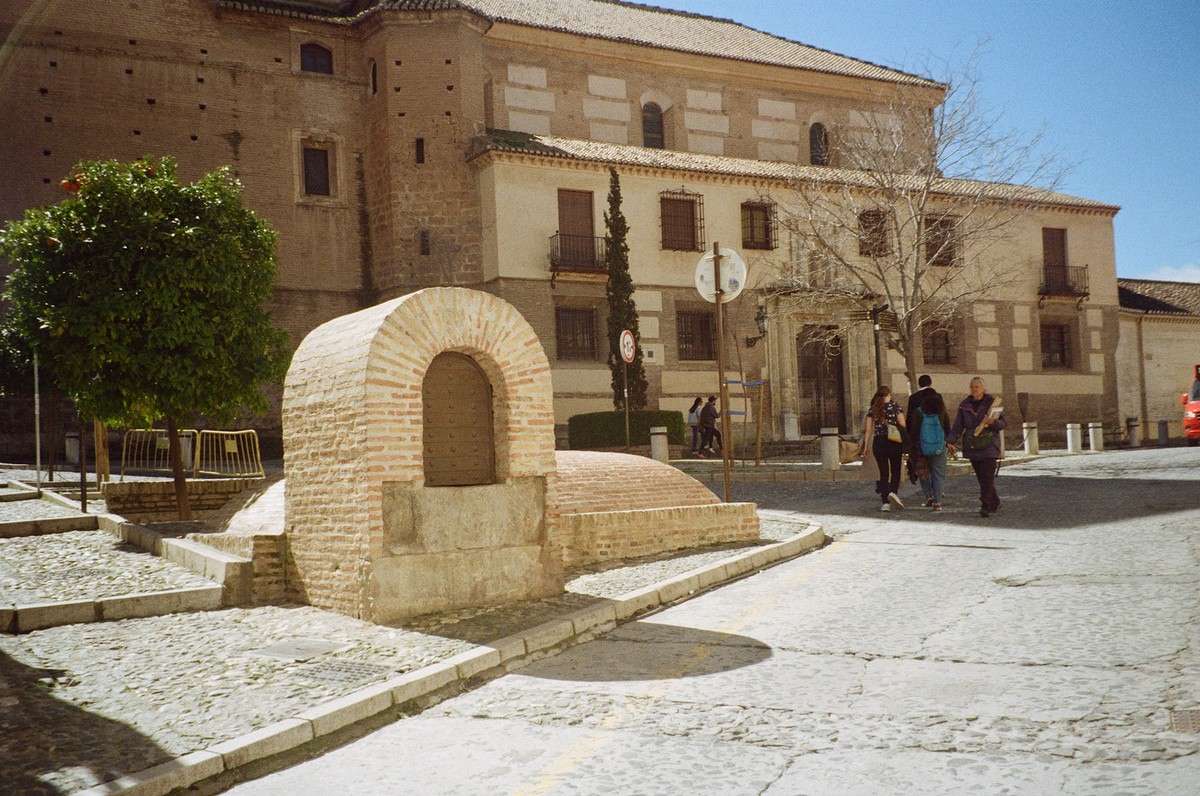
Public Aljibe or cistern in the neighborhood of Albaicín. Water is stored here.
On the other hand, the Generalife and the Alhambra’s main water source is the Darro River. The water is taken approximately 6 km away from the palace through a series of canals including the Acequia del Rey, the Acequia del Tercio and others. The canals operate by gravity, beginning at a point were the River Darro elevation level is adequate in relation to the Alhambra, allowing water to flow with a gentle slope from the river into the palace. Water diverted from the Darro River returns to the river farther downstream after being used.
Architecture to move water
Throughout the Alhambra complex, the open-air canals distribute water through a network of fountains, canals, albercones (reservoirs), irrigation systems, and other water features. This transforms the Alhambra, Generalife and surroundings into a paradise of water, where pomegranates (Punica granatum), figs (Ficus carica), magnolias (Magnolia grandiflora), bay laurels (Laurus nobilis), cypresses (Cupressus sempervirens L.), sour oranges (Citrus aurantium) and many other plants thrive.
The patios, gardens, and secluded corners of the Alhambra create an oasis where visitors can rest in the shade, feel the cool breeze carried by flowing water, listen to its gentle murmur, and enjoy the fragrance of blooming flowers. These sensory experiences are an important part of the monument's architectural and landscape design, reflecting centuries of cultural and artistic heritage. As one of Spain's most celebrated landmarks and a world-renowned symbol of Islamic architecture and garden design, the Alhambra continues to captivate visitors each year and teach us the quality of an architecture that is embeded in landscape. The Mexican architect Luis Barragán, among many others, drew lasting inspiration from this place throughout his architectural practice.
Architecture to store water
In the case of the Albaicín area, the canal that brings water to the city originates from a spring of water that also supplied local activities along its path including agriculture, textile, flour production and other industries. The shape and material of the canal change throughout the landscape, sometimes it is built with bricks, sometimes with stones, and other times it is covered. We walked from the water source alongside the canal, observing its changing form, the emergence of pathways, the shade cast by a willow tree, and even aquatic plants growing along its edges, acknowledging that architecture can respond to and evolve with the changing landscape.
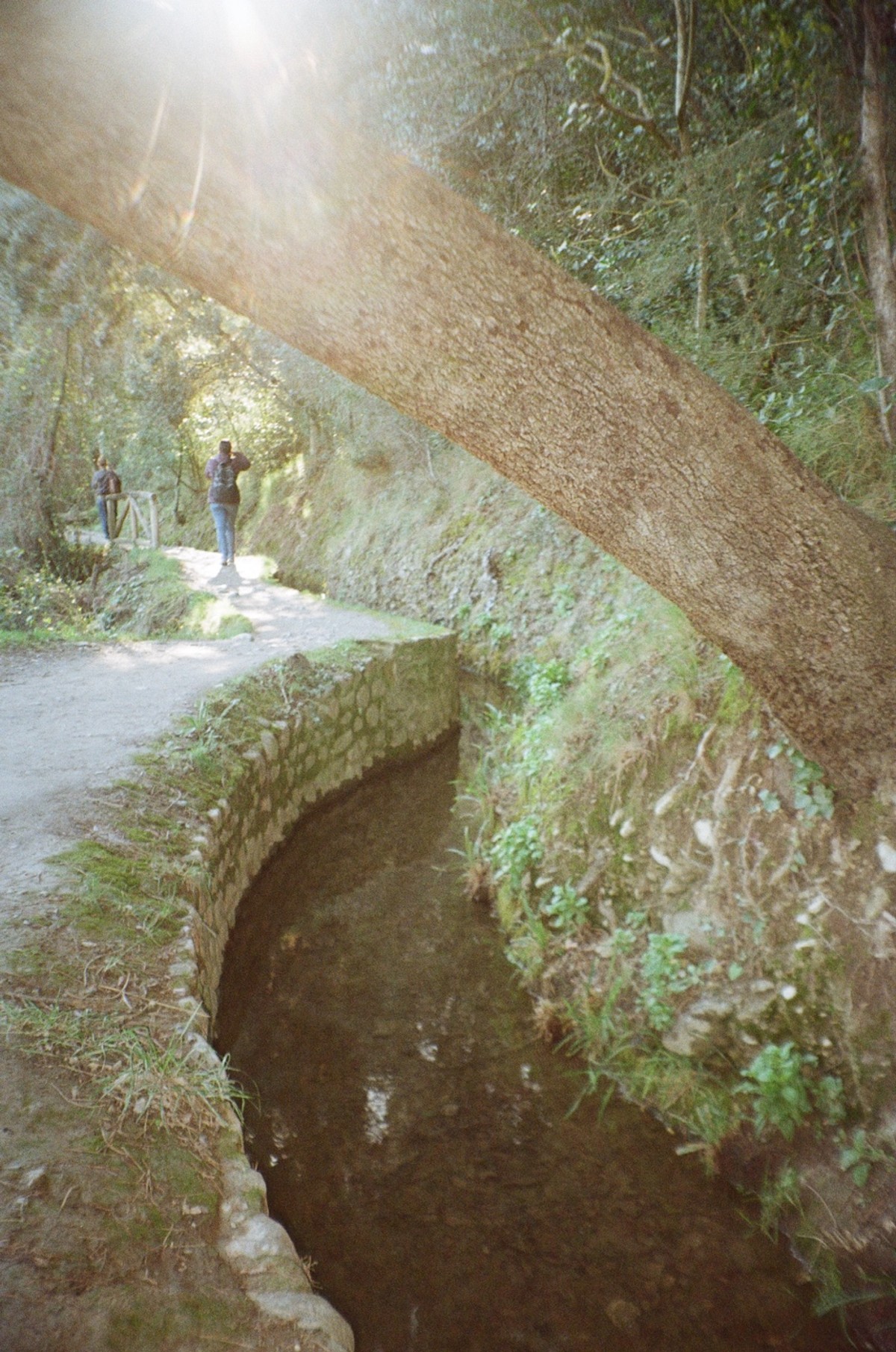
Acequia del tercio bringing water from the River Darro, now a few meters from arriving to the Generalife and Alhambra.
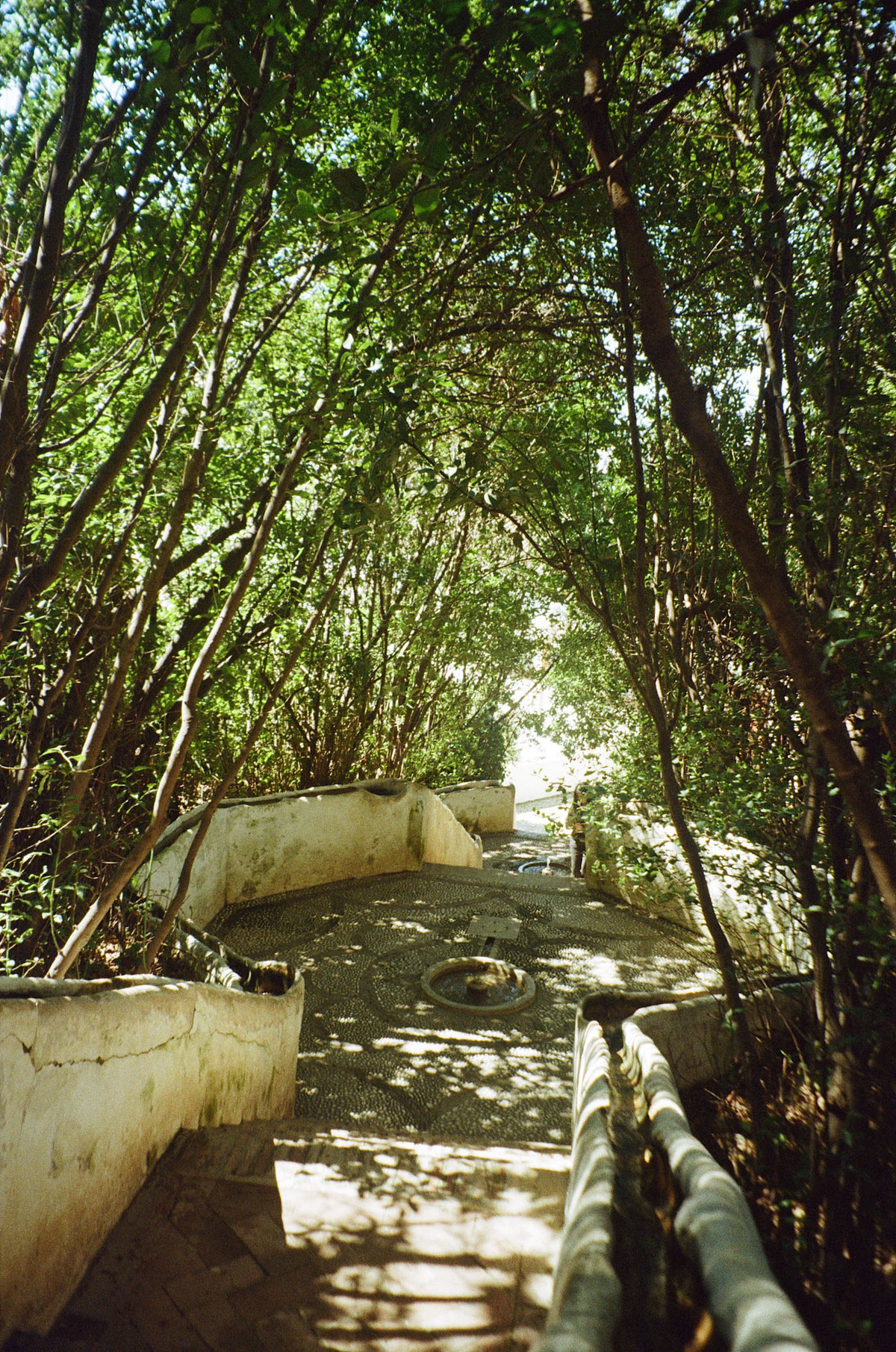
Staircase with water flowing through the handrails. Leading to the Generalife.
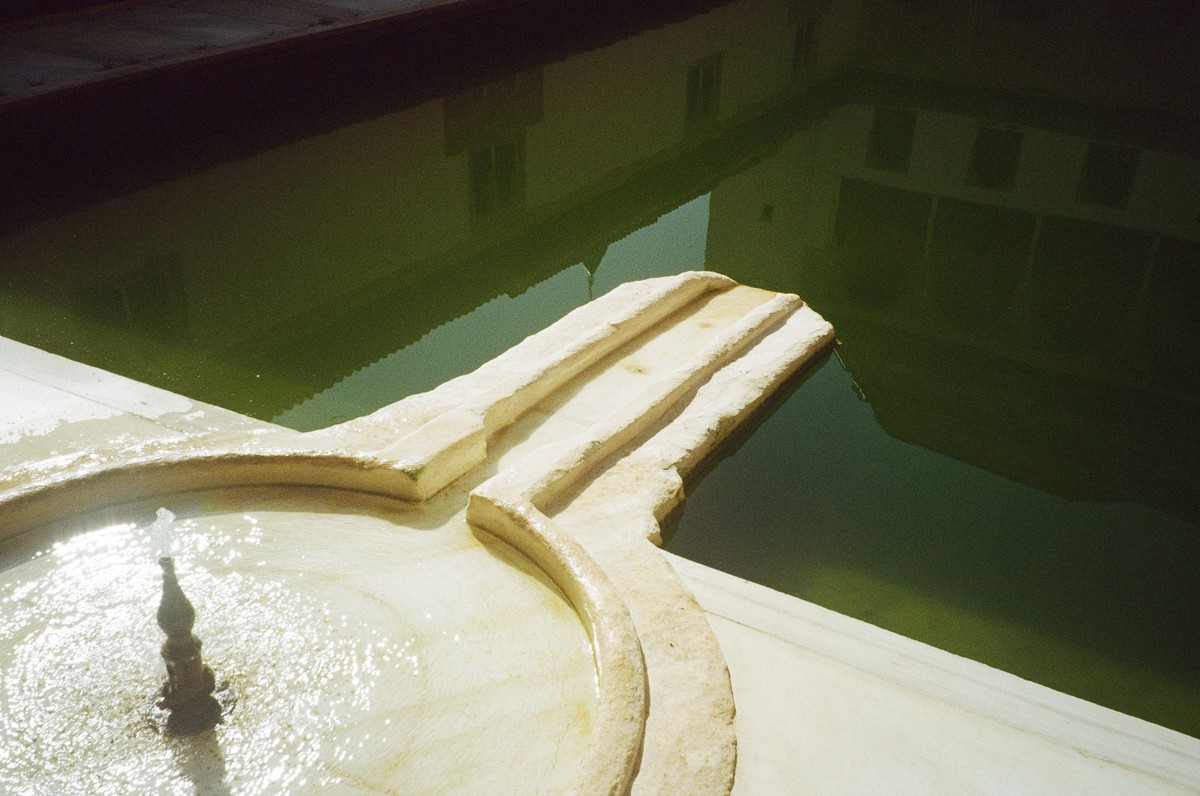
Water fountain inside a patio in the Alhambra
The water arriving from the spring to the Albaicín is stored in aljibes —Cisterns— or albercones — open air cisterns— where it is held until needed. The aljibes of the Albaicín shaped the city's urban development and functioned in close connection with its social practices. They created shared public spaces where neighbors gathered to collect water, meet, and converse. Each cistern is unique, responding to its surroundings while also creating a distinctive space of its own.
Architecture to celebrate water
Water was also recieved in walled gardens called Carmenes, where it would be used privately for vegetables, animals or human use. This gardens have different shapes and distributions, water can be seen flowing in fountains, small pools, or open air basins, that look like small pools. Following gravity, the carmenes are located in strategic spots, so they follow a terreaced system where they could recive water by gravity. These walled paradise were a contrast to the citiy’s heat and noise. Nowadays, the carmenes are cherished and considered local heritage.
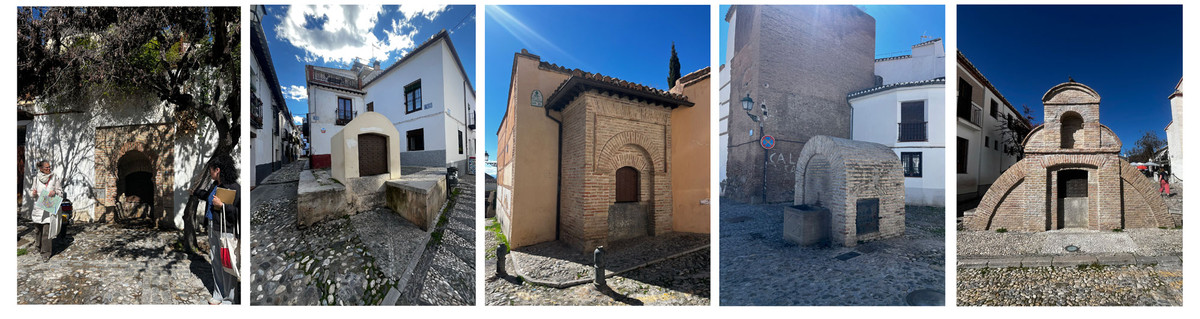
Some of the Aljibes at the Albaicín neighborhood
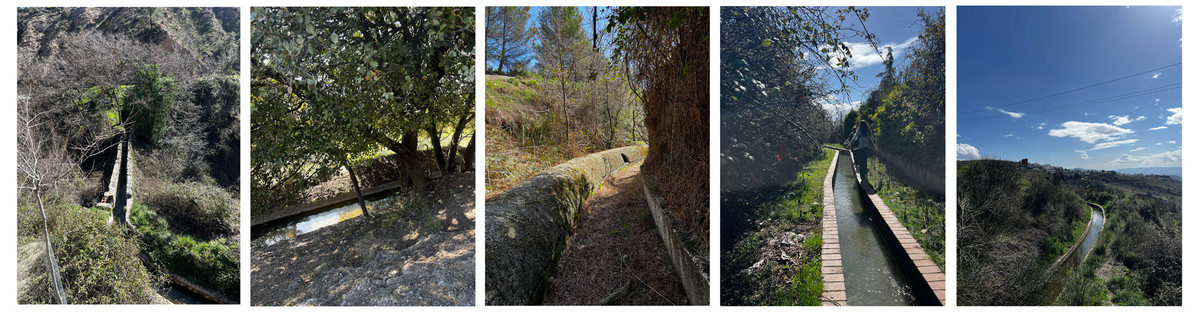
Canals that distribute water from the Fountain of Tears to the Albaicín neighborhood
Urban systems for storing and distributing water played an important role in organizing the city of Granada. We can learn from this city that the most resilient use of resources is the one that reveals and undestands landscape. This is an example showing that reading and understanding landscape can create something unique, allowing water and architecture to become one.
* Inés Plasencia is studying for a Master’s degree in Landscape Architecture at the Institute for Landscape and Urban Studies at ETH Zurich.
Für Studierende nur 9 Franken im Monat – Jetzt Hochparterre abonnieren!
«...» «»